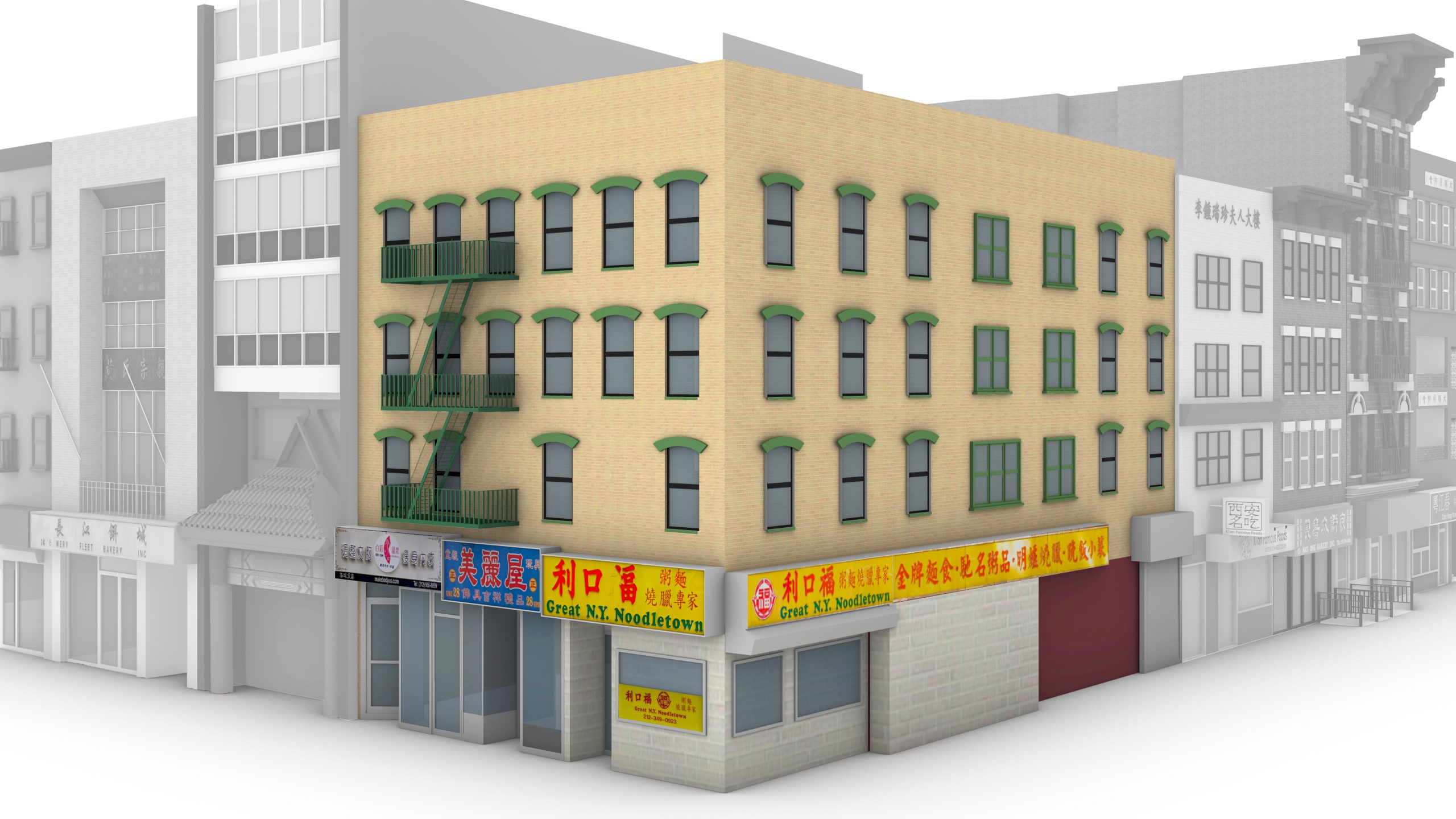
28 Bowery
Great N.Y. Noodletown
Built ca. 1860
2024
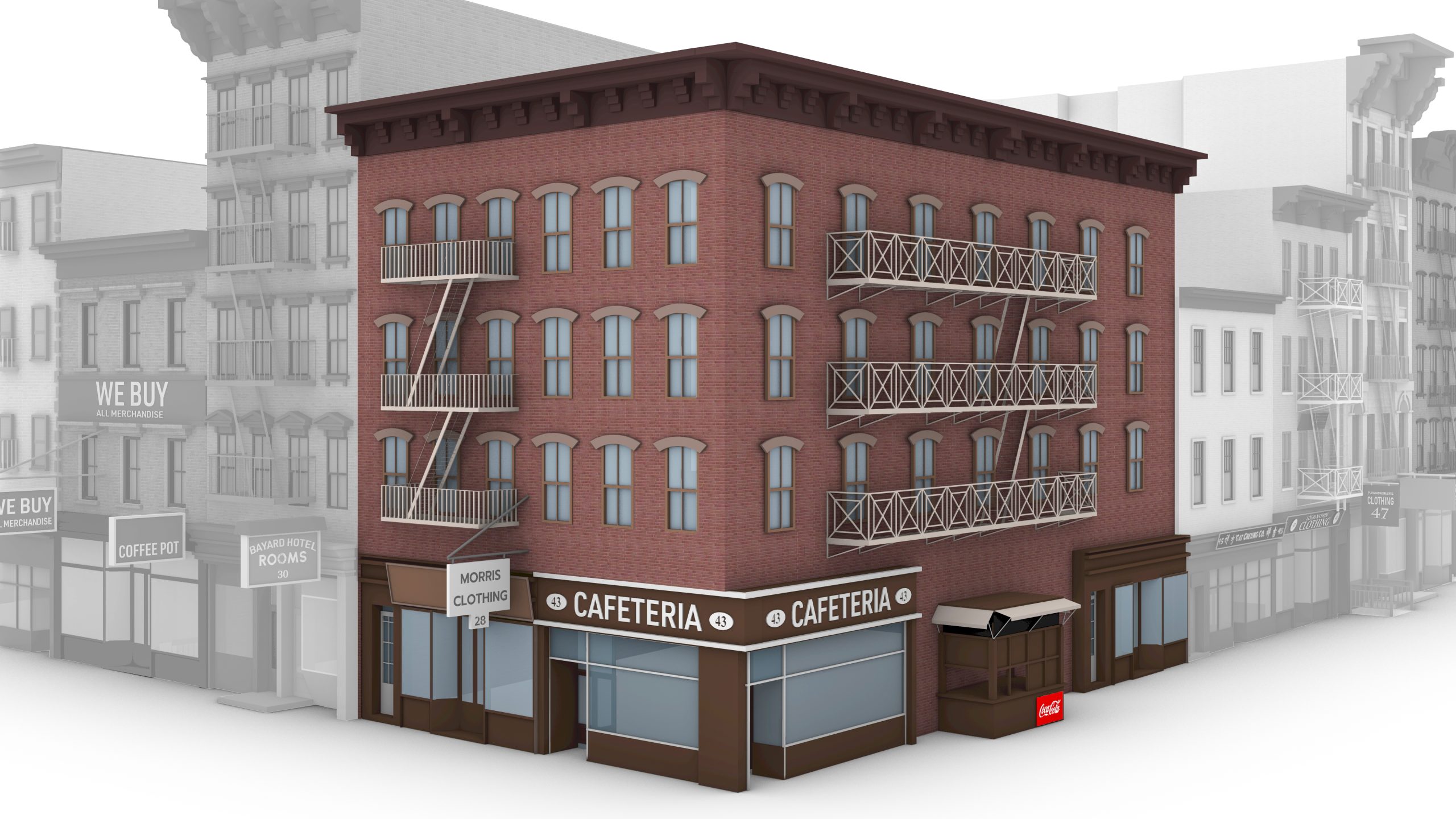
28 Bowery
Cafeteria / Morris Clothing
Built ca. 1860
1940s
Interview
WITH VICTORIA LEE (CHINATOWN RESIDENT AND FOUNDER OF NONPROFIT 'WELCOME TO CHINATOWN')
+ How long have you been living / working in Chinatown? How did you come to be connected to Chinatown? What was Chinatown like then?
I’ve been living in Chinatown for over 10-11 years. Before that, I used to come here every single weekend, because I grew up in Brooklyn and would come out to visit my grandmother. When I started college, I moved out to Chinatown. I consider this home. These small businesses are an integral part of my formative years — when I think about my favorite meals, renting VHS, going to the temple…
+ What Chinatown buildings are you more deeply connected with?
I’m connected to 135 Eldridge at Delancey, my grandmother’s building. It used to be a red building, an old tenement building. It was bought by a major developer about ten years ago. It also used to be a multigenerational building. It was rent-controlled, so they did a lot of tenant harassment to get them out. It was where our family gathered. My grandmother immigrated here in the late 1960s — she also passed away in the building. At the time, we knew she wanted to pass at home because it was such a meaningful place for me.
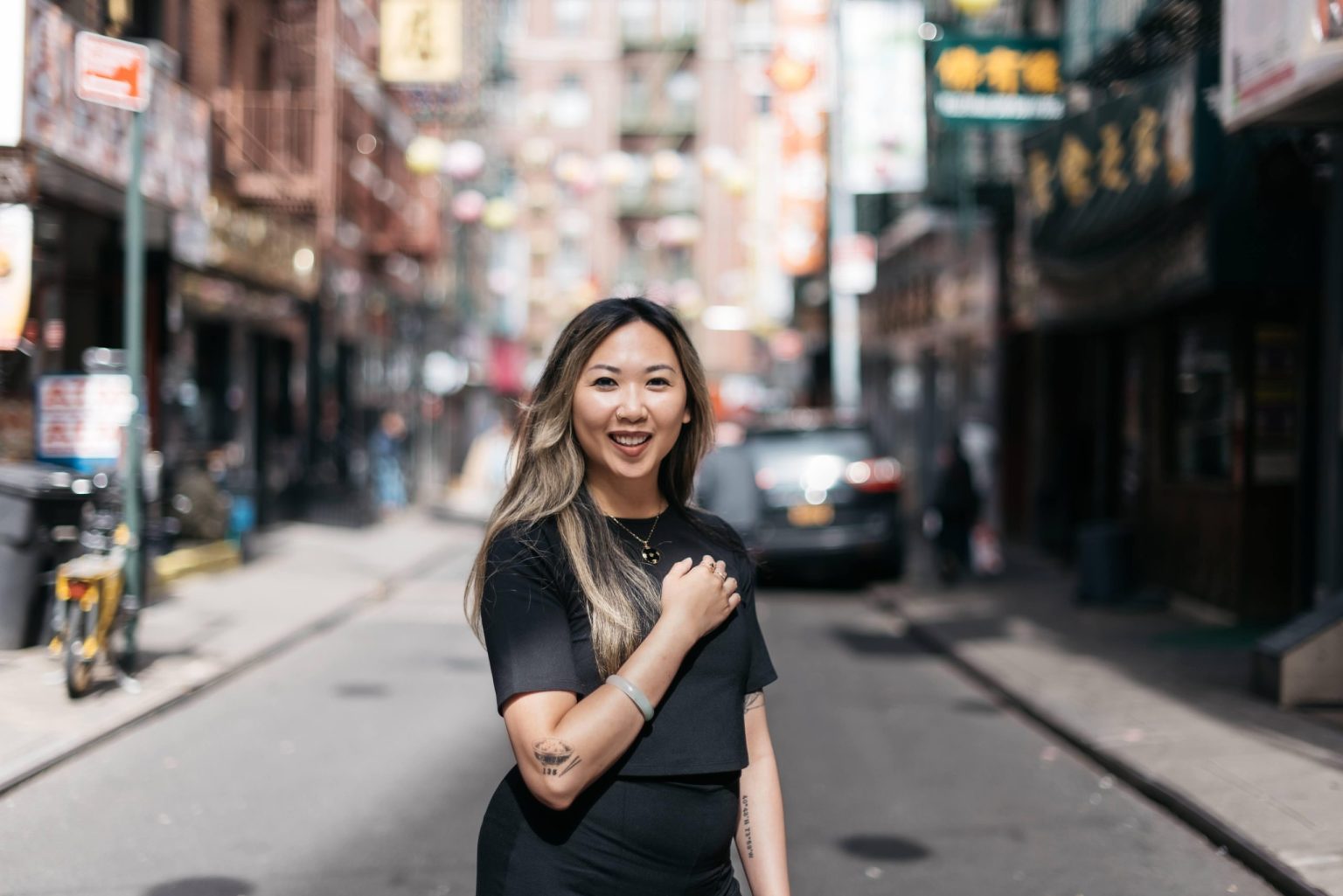
Vic Lee in Chinatown, 2024. Photograph by Zack Chan.
My grandmother was illiterate; she didn’t learn English and I remember my mom saying that the first week she was here, she was lost… She was asking [around] for a red building in Chinese — they walked around for hours until she could remember where the building was. The old gold letterings that used to say 135 have now been replaced.
My grandmother is now rested at the temple by the Manhattan Bridge.
At Grand and Eldridge, there is Ben’s Meat Market. My family would buy cha siu and duck from there. There’s been very little change to the business. Throughout the past couple of decades, that place has remained constant with the yellow awning. It’s always a husband and wife who run it.
At Bowery and Hester was a basement unit, a place where you could rent TVB movies. They’d have posters lining the stairs.
And… one of my favorite constants is Great N.Y. Noodletown.
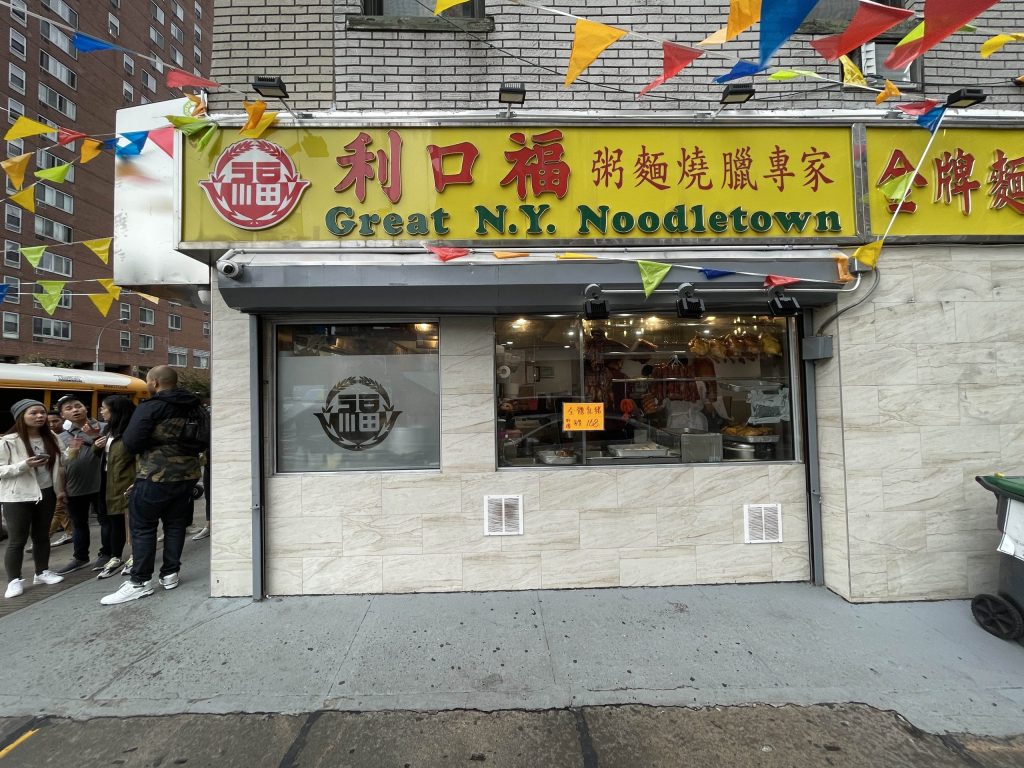
Bayard side of the restaurant’s storefront, 2024.
+ Tell me about your memories of Great N.Y. Noodletown.
My dad love love loved their noodles there. Before we drove back to Brooklyn, he would call and order. The lady who answered the phone was notoriously mean, but he would deal with her to order the noodles. He would order the duck noodles and ask for the soup to be separated. We would do that every single week.
And it became a part of my childhood, to go to Great N.Y. Noodletown to eat with my friends.
+ How would you describe your memories of the restaurant’s interior?
There is always lots of clattering and clanging: chopsticks and white ceramic bowls and cups.
You open the door, you walk in and there are all of these lines of people. There’s no sense of organization. You order and you step to the side. The waiters are always maneuvering around. The counter to pay is on the right. There’s the L-shaped counter with the butcher and the other side has soups and noodles.
There’s a mixture of round and square tables. It was always busy. During the day, there were less non-Chinese there.
My favorite was the duck noodles — thin egg noodles with roast duck.
+ How have you seen Chinatown change over time?
The yellow signage [of Great N.Y. Noodletown] has always been there. Walking inside – the tables and the walls — I don’t remember any of it changing.
What has changed is you can no longer just assume that everyone speaks Cantonese. It was one of the few places where I could practice my Cantonese. With my grandmother, who didn’t speak English, we could stop anyone or walk into a business and they would speak Cantonese. Now, it’s a lot less of that. You can see the mix of businesses that are here, and a lot don’t cater to everyone now. There are a lot of businesses that are opening in Chinatown that aren’t approachable.
+ Tell me about a childhood memory of Chinatown.
In the early 1990s when I was five or six, there used to be toy vans and trucks that would drive over to Sara D. Roosevelt Park (on Hester and Forsyth/Chrystie) and they would put on a performance. The end goal was to sell toys to the kids. It was all seniors, grandmas and grandpas, who were taking care of the kids. It was a white male and the van would open up, like at San Gennaro. They would do a game show type thing, where they would select a few kids from the crowd to participate. For everyone else, they would be able to buy the toys. People would just sit and watch.
28 BOWERY - HISTORIC IMAGES

Photograph of crowd on Bayard taken January 1976.
Photograph by Emile Bocian. Courtesy of the Museum of Chinese in America (MOCA) Collection.
28 BOWERY - BUILDING PHOTOGRAPHS
Photographs taken between 2022 – 2024.