WITH ROGER CHAN (FAMILY MEMBER OF FORMER RESIDENTS OF 100 BAYARD)
Interview conducted throughout the spring of 2022.
All photographs in this interview are courtesy of Roger Chan unless otherwise noted.
+ Please give me a brief introduction of yourself. How did you come to be connected to Chinatown? I grew up in Staten Island and came here to Chinatown often throughout the years. I remember my family picked up our family cat on Mott Street. It was in one of those antique stores and my parents were looking for a family cat for the house. There was a shop cat there to catch the mice and we ended up taking it home.
My parents came to New York City in 1935 from Guangzhou. At some point, they moved to 100 Bayard. 100 Bayard and the building next to it, 98 Bayard, no longer exists as well. It’s a parking lot now. They lived there from the early 1940s until 1960.
+ Tell me more about your family’s history in NYC. Do you know when they moved to Chinatown? Before my family’s Chinatown settlement, they initially lived in the East Village of Manhattan at 121 2nd Ave. The exact 2nd Ave location had been unknown for decades until a massive blast happened at that location in 2015. Months after the building’s destruction, my cousin, Norman Lau-Kee, revealed that he worked at my father’s restaurant in that building. My family also lived there. In 1937, it was a family of four: father (George Bot Chan), mother (Kwai Hing Chan), and two daughters (Elaine and Elizabeth).
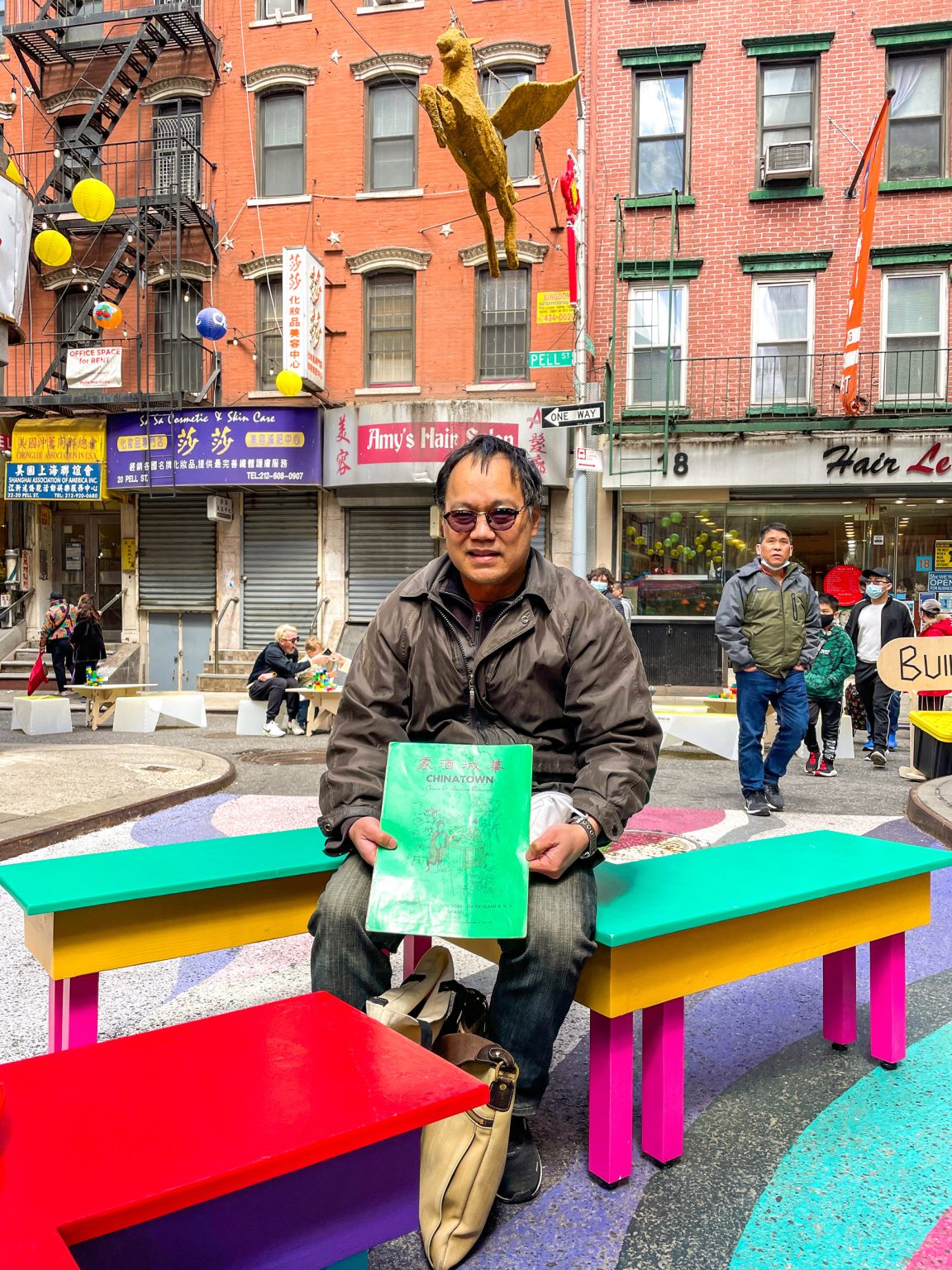
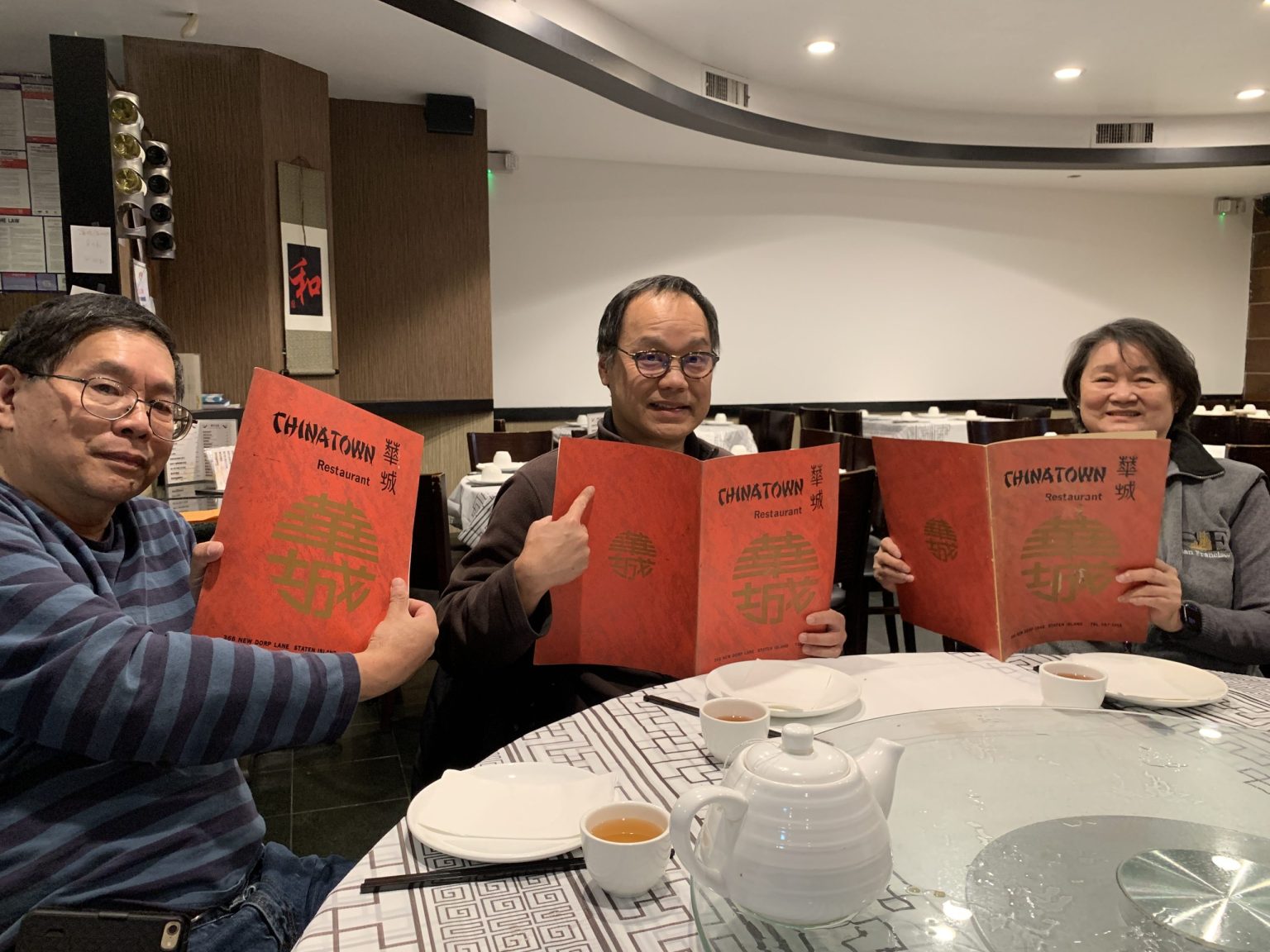
Roger Chan holding up a family copy of his father’s Chinese restaurant, now closed. Photographed by Cheryl Wing-Zi Wong at one of the ‘REFLECTIVE URBANISMS: Mapping New York Chinatown’ community storytelling circles in April 2022.
(Left) Father, daughter Elizabeth, and Mother near 121 2nd Ave (1938) (Right) Almost the exact spot where Roger’s parents took their picture almost a century ago. Photographed in 2022.
There were no records for the exact year when my family moved to Chinatown. It was sometime after the birth of my parents’ eldest son, Raymond, in 1939. The earliest known artifact of them in Chinatown was a few photographs in Columbus Park around 1942. The Chan family would be residents of 100 Bayard Street for about 20 years.
(Left) Father (George) with children (Elaine, Raymond, and Elizabeth) near the corner of Bayard and Mulberry in the background, 1942 or 1943. (Center) Mother (Kwai Hing Chan) with children (Elizabeth, Raymond, and Elaine). (Right) Elaine, Raymond, and Elizabeth with Leung Hong. Leung Hong was a friend of the family who joined the Navy after WWII started. The woman in the upper right photo would become his wife later.
Next-door building at 98 Bayard with Raymond, Mother, Roland, Elizabeth, and Elaine, 1946.
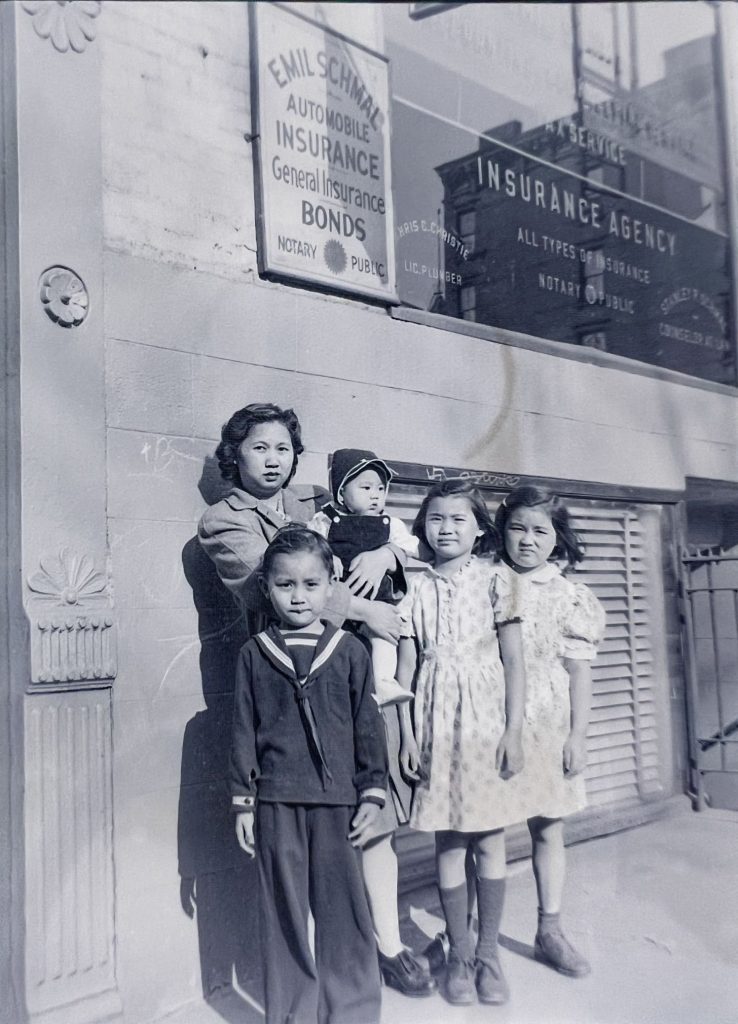
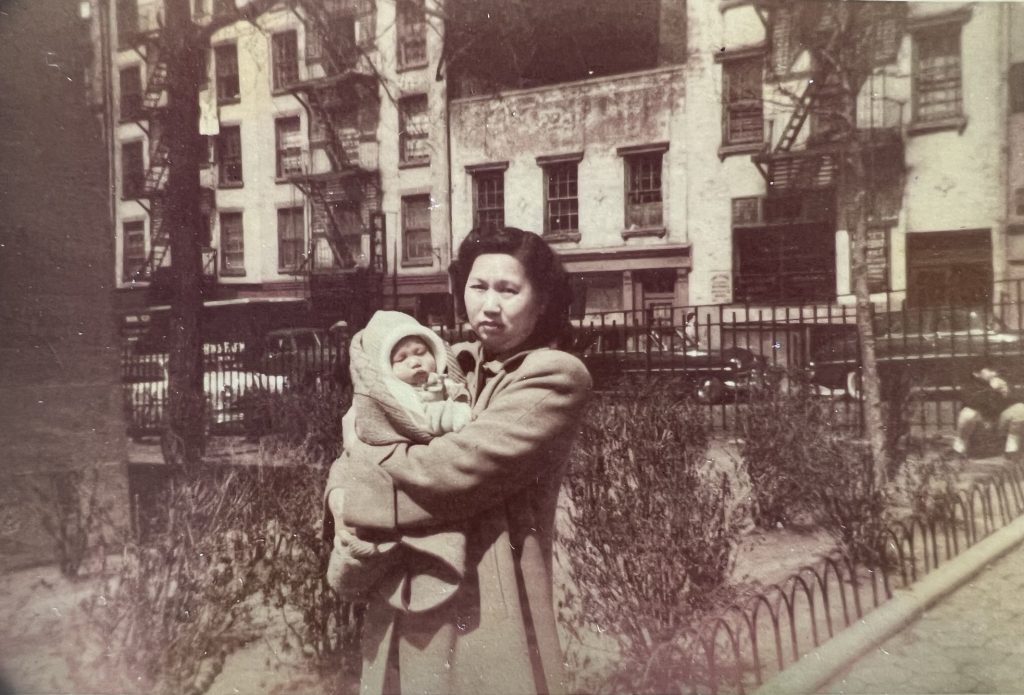
100 Bayard St directly behind Mother with newborn Robert, 1953.
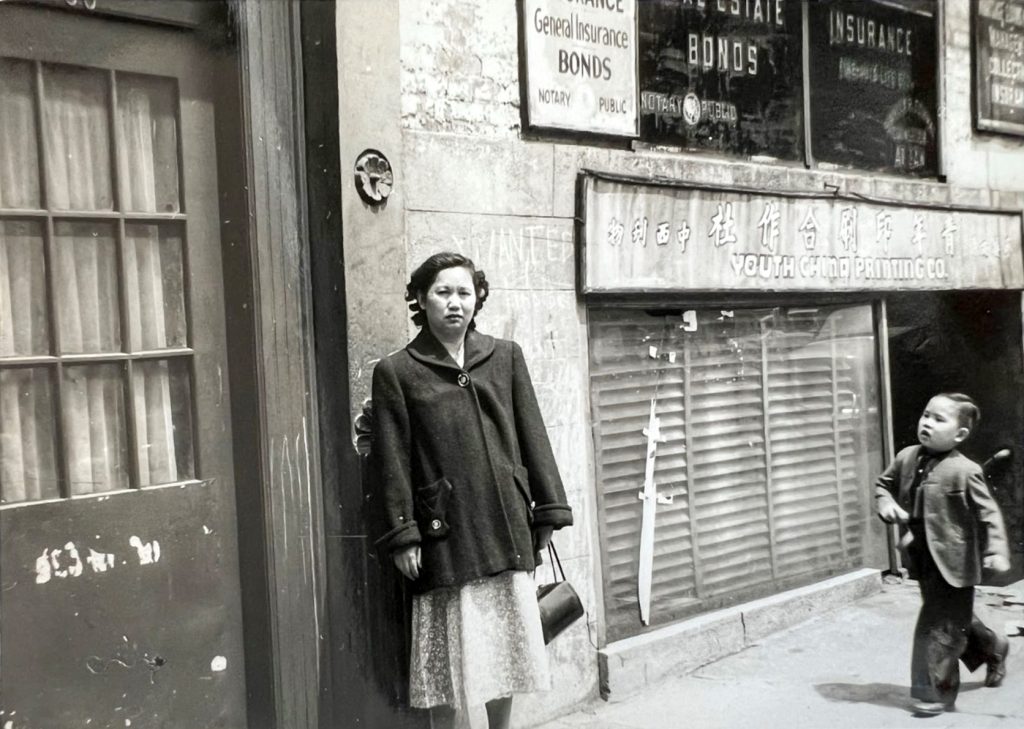
100 Bayard St entrance with Mother and Robert, 1959.
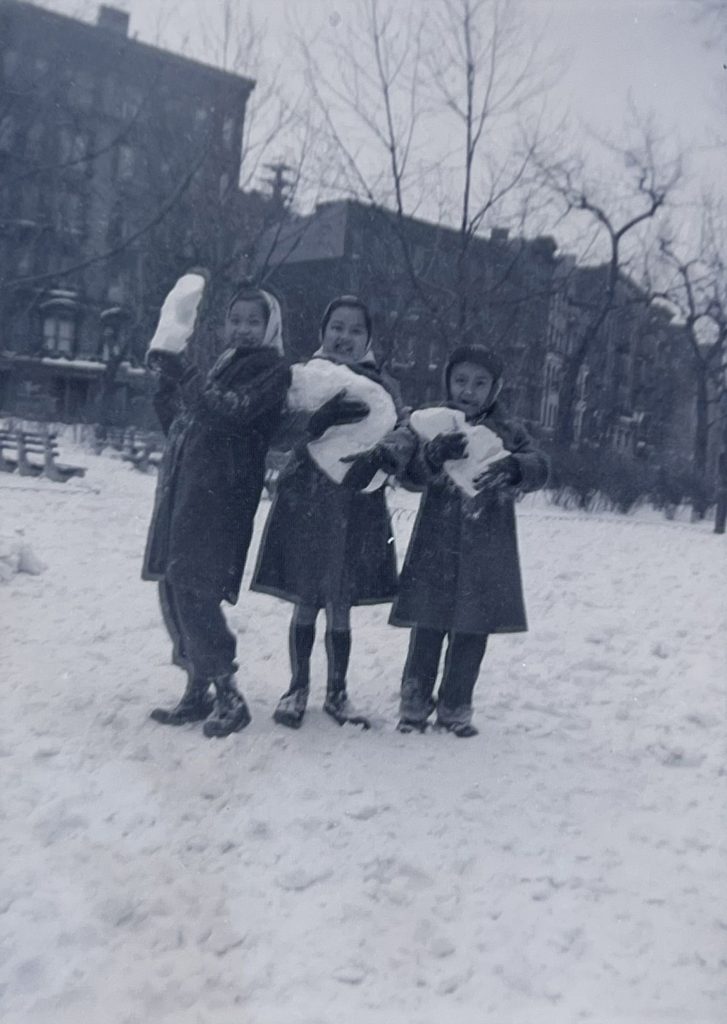
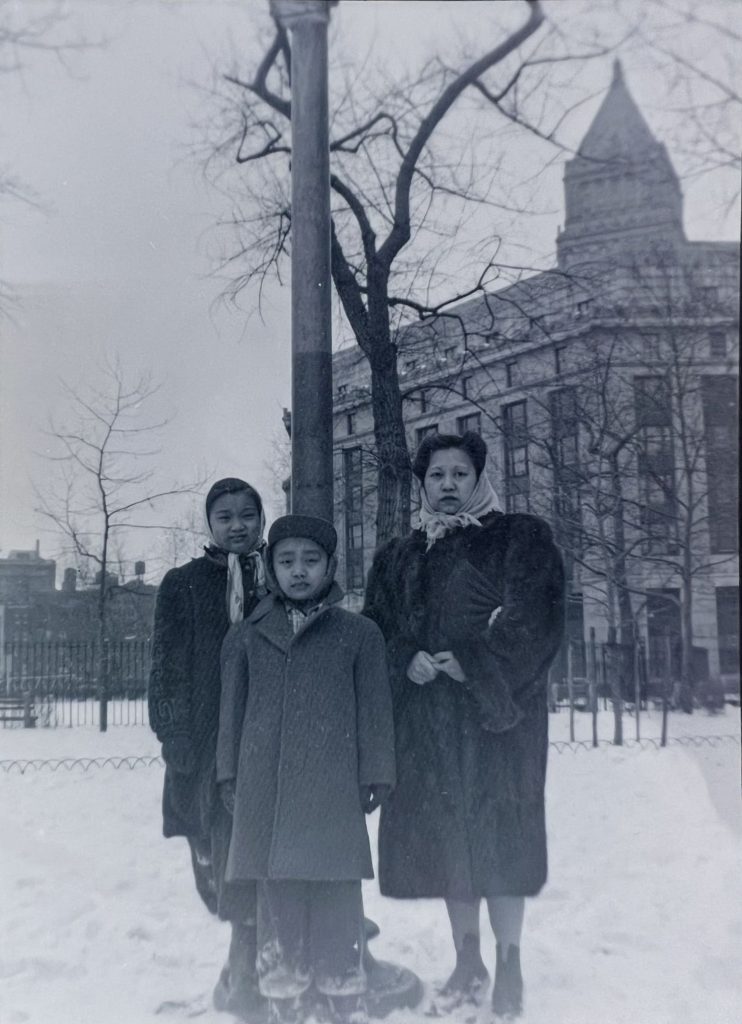
+ What was your family’s life like, growing up in Chinatown? What different places was your family connected to in the neighborhood? My mother would be the devoted wife and dutiful mom raising the children. As told by Elizabeth, disciplining and assigning each of the first three children with dinner chores such as setting the table; serving the food; and cleaning the dishes. The last chore would be the most dreadful one to whoever was assigned for that dinner night. Father would work in the restaurant business throughout the years. The three children would go to PS 23 on Mulberry Street for grade school and then onto PS 130 at Baxter Street. Father would take night classes at PS 23 to learn English. Columbus Park would be the family’s walk-in-the-park and playground throughout the seasons and years in Chinatown.
Elizabeth, Elaine, and Raymond in Columbus Park, ca. 1945.
Elizabeth, Raymond and Mother in Columbus Park, ca. 1945.
(Left) Monkey barring in Columbus Park with Mulberry Street buildings in the background, ca. 1946. (Center left) The same Mulberry Street buildings in 2022. (Center right) Father, Mother, and Roland in front of Columbus Park Pavilion, ca. 1947 (Right) The Columbus Park pavilion in 2022.
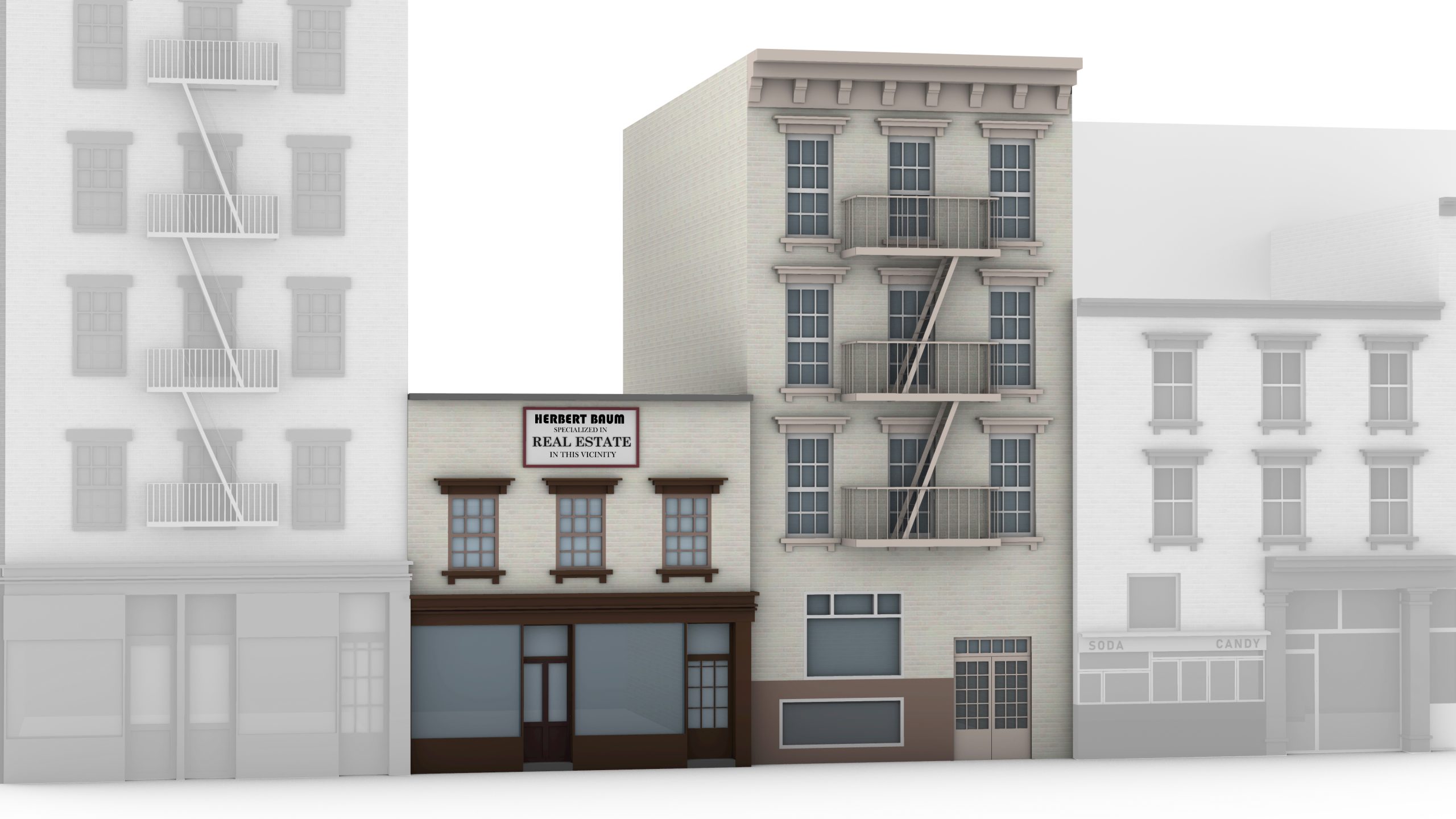
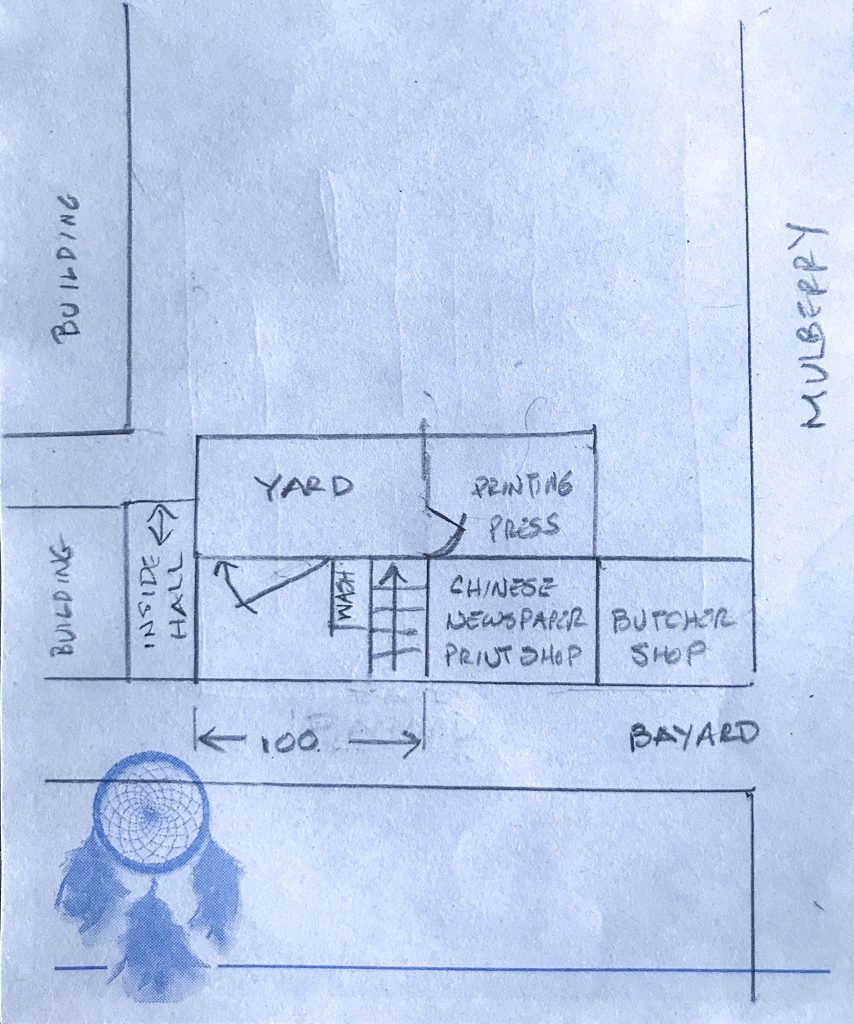
+ Does your family remember any other history or past lives of the building at 100 Bayard? What were the ground floor businesses throughout the two decades your family lived there? My parents would have another son each decade during the 1940’s (Roland) and 1950’s (Robert). As mapped out by my brother Robert, 100 Bayard is only a short distance away from the corner butcher shop. A Chinese newsprint shop and the Schmal legal office was located in the next building at 98 Bayard. According to Robert, 100 Bayard had a trading store on its ground floor for a period of time during the 1950’s.
During Elizabeth’s youth, two elderly Italian men made pizza during the weekends in the basement of 100 Bayard. The smell of fresh baked pizza would drift through the bedroom windows around midnight and build up the family’s anticipation of buying these pizzas when they open up. A square pizza slice went for 5 cents.
Elizabeth recalls that the next building’s storefront was Yee Hing Farm at 102 Bayard. They sold crate boxes of New Jersey Chinese vegetables throughout Chinatown’s local stores.
Going further back to the 1940’s, Elizabeth recalls going downstairs on some nights with my other siblings, Elaine and Raymond, to sneak a peek at the armed forces’ servicemen dancing with their partners. 100 Bayard’s first floor was a temporary recruiting/recreational hall for the US military during World War II.
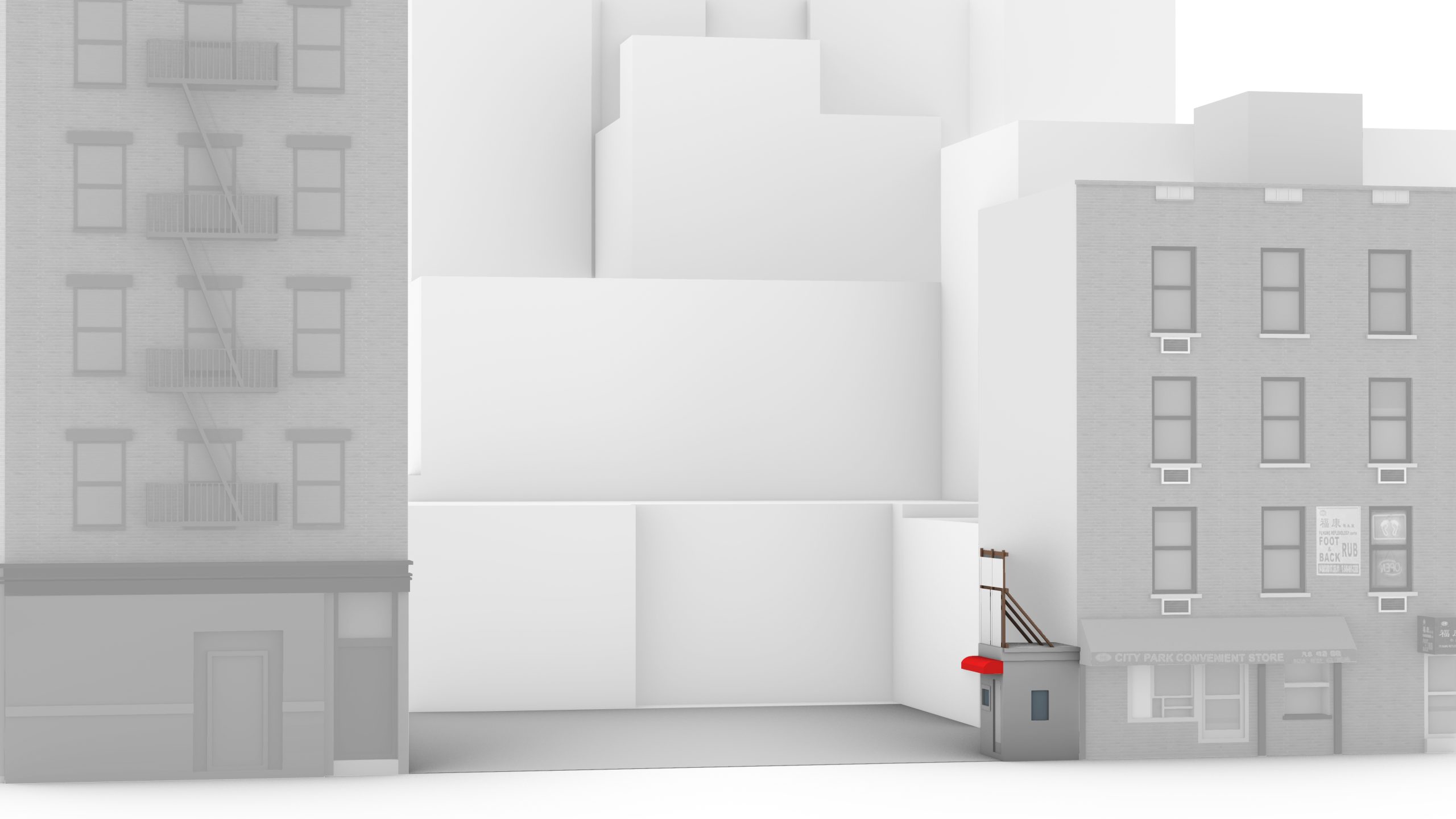
Schematic exterior street mapping of 100 Bayard. Mapping timeframe is the late 1950’s. Drawn by Robert Chan from memory, 2022.
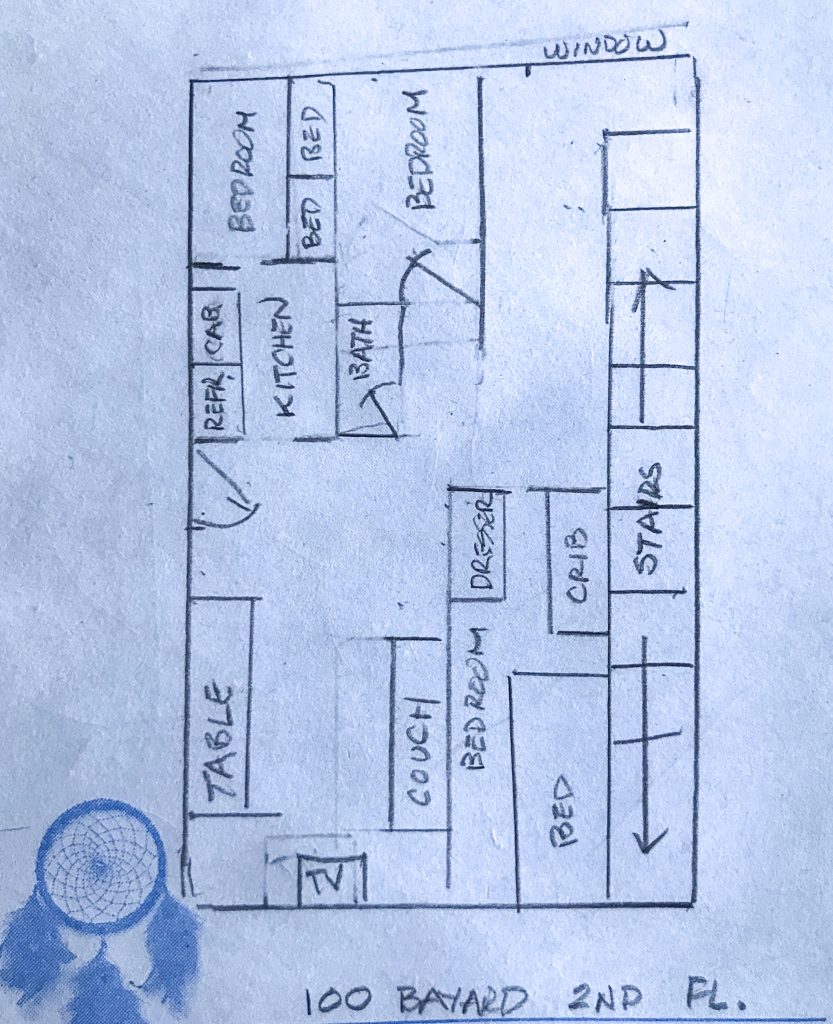
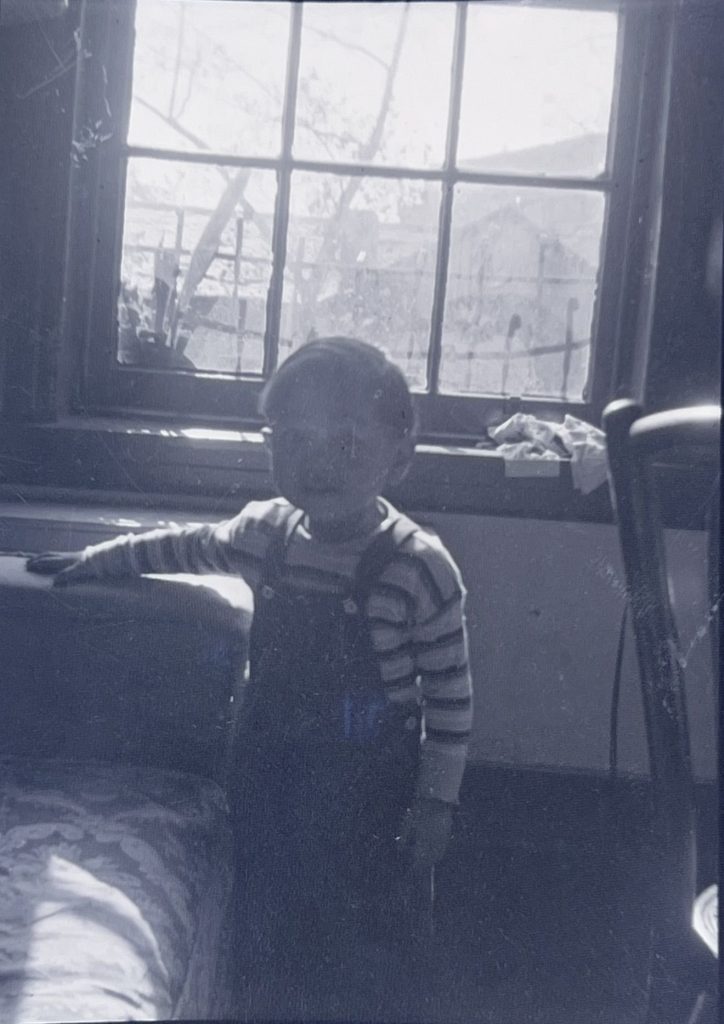
+ What does your family remember about the building? What was the interior like? How did your family have the house set up? Do your siblings remember looking out at the window at Columbus Park? The second floor of 100 Bayard is where the family resided. Robert’s mapping of the second floor would represent what he recalled before the family moved from Chinatown to Staten Island around 1960. Three bedrooms would be shared as follows: parents with Robert; two sisters (Elaine and Elizabeth); and two brothers (Raymond and Roland). One single bathroom would be used for a family of seven along with a kitchen and living room. Columbus Park Pavilion could be seen through the front windows.
Schematic floor plan of the family apartment at 100 Bayard, drawn by memory by Robert Chan in 2022.
Inside looking out towards Columbus Park with Raymond, ca. 1945.
(Upper left) Elizabeth with Robert in living room, 1953. (Upper right) Mother with Robert, 1953. (Lower left) Robert near parents’ room,1954. (Lower right) Mother at dining table near kitchen, May 1957.
Throughout the years, visits from family and friends would stop by 100 Bayard. The Kee family would be a frequent visitor. Ira Chan-Kee and Ester Kee can be seen through past photos. Esther would tell a story on how she would ask and then get advice from my mother on raising her newly first-born son, Glenn. Friends included the Leong Hong family, Ng ‘Suie Yee’ Wong of Mulberry Street, and Lau Geu. Lau Geu’s connection to history was that she was the housekeeper of General Douglas MacArthur’s wife, Jean.
On 11 Mott was the office of Norman Lau-Kee, a prominent Chinatown lawyer at the time. His son, Glenn Lau Kee, is my second cousin.
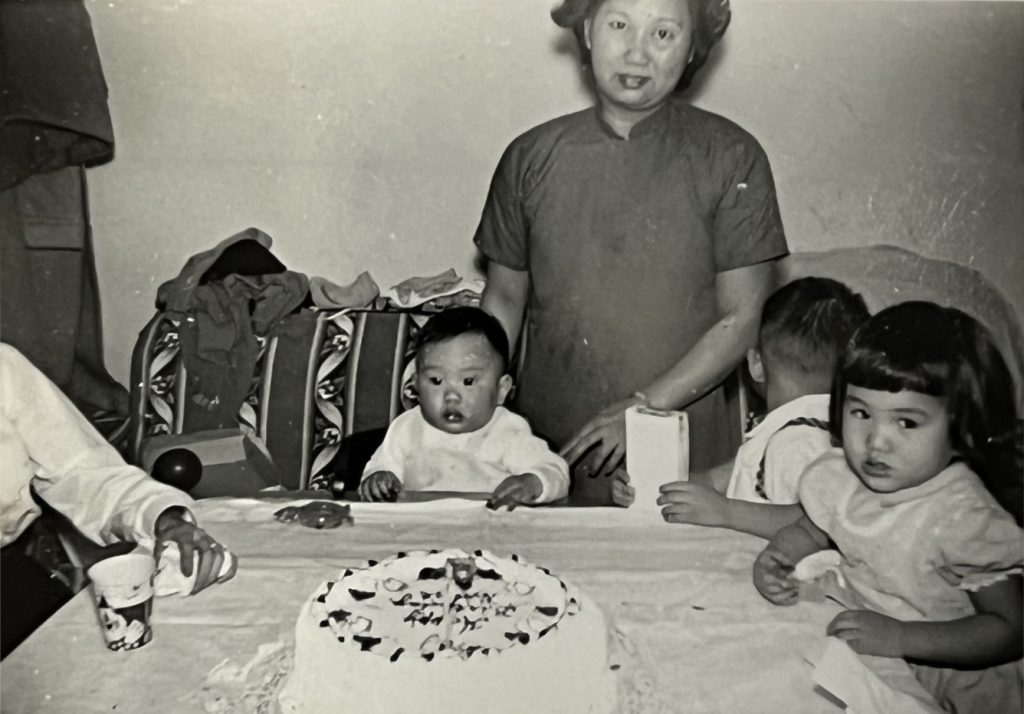
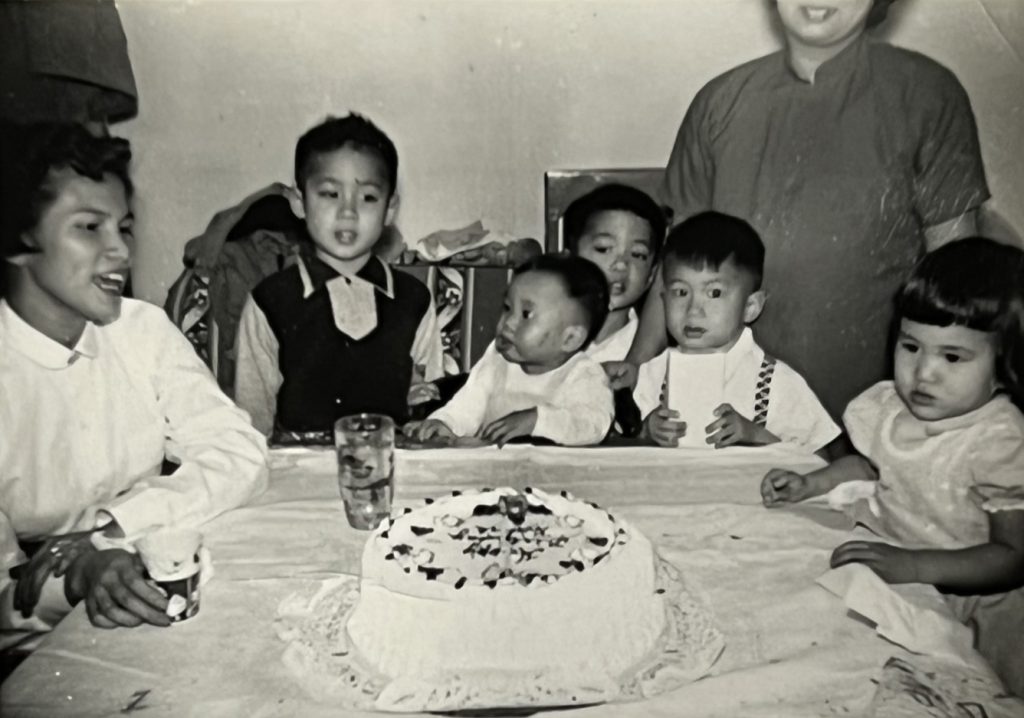
Esther Kee at birthday gathering at 100 Bayard, 1954.
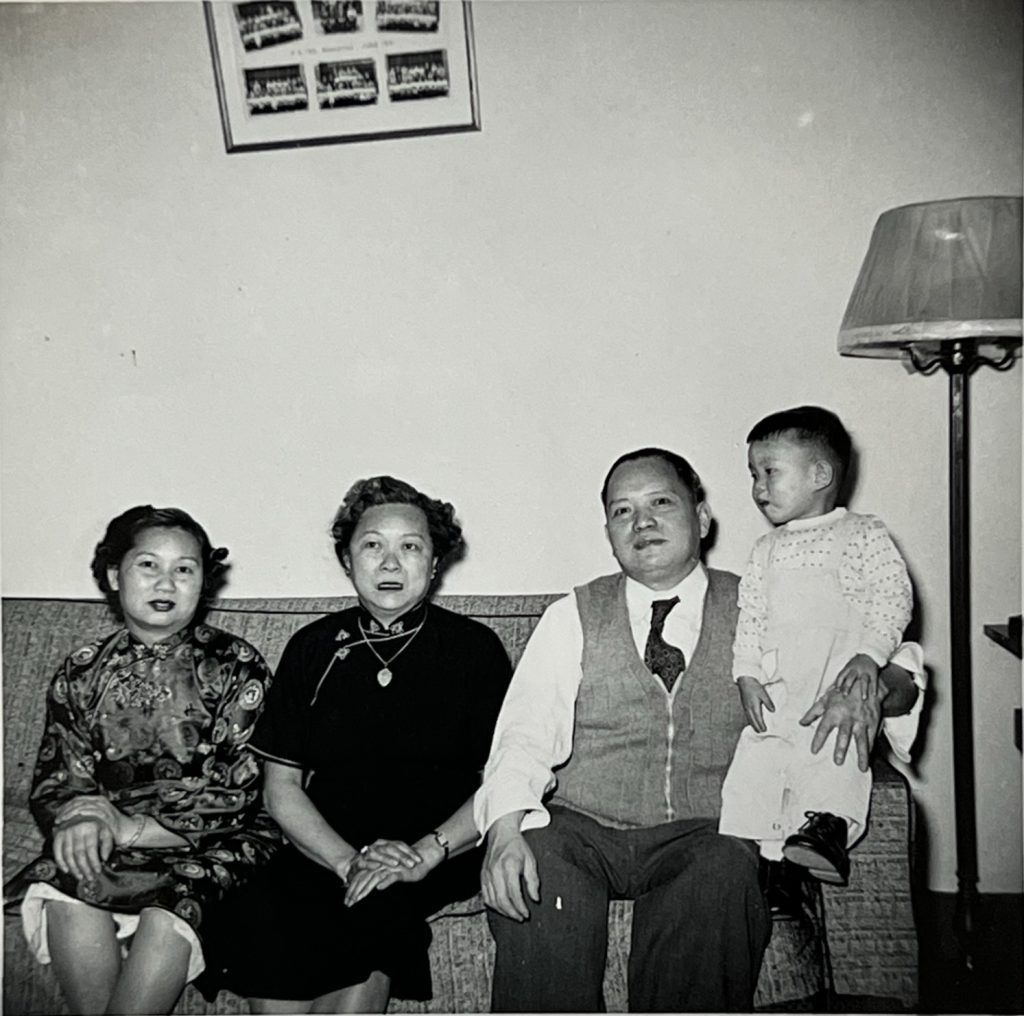
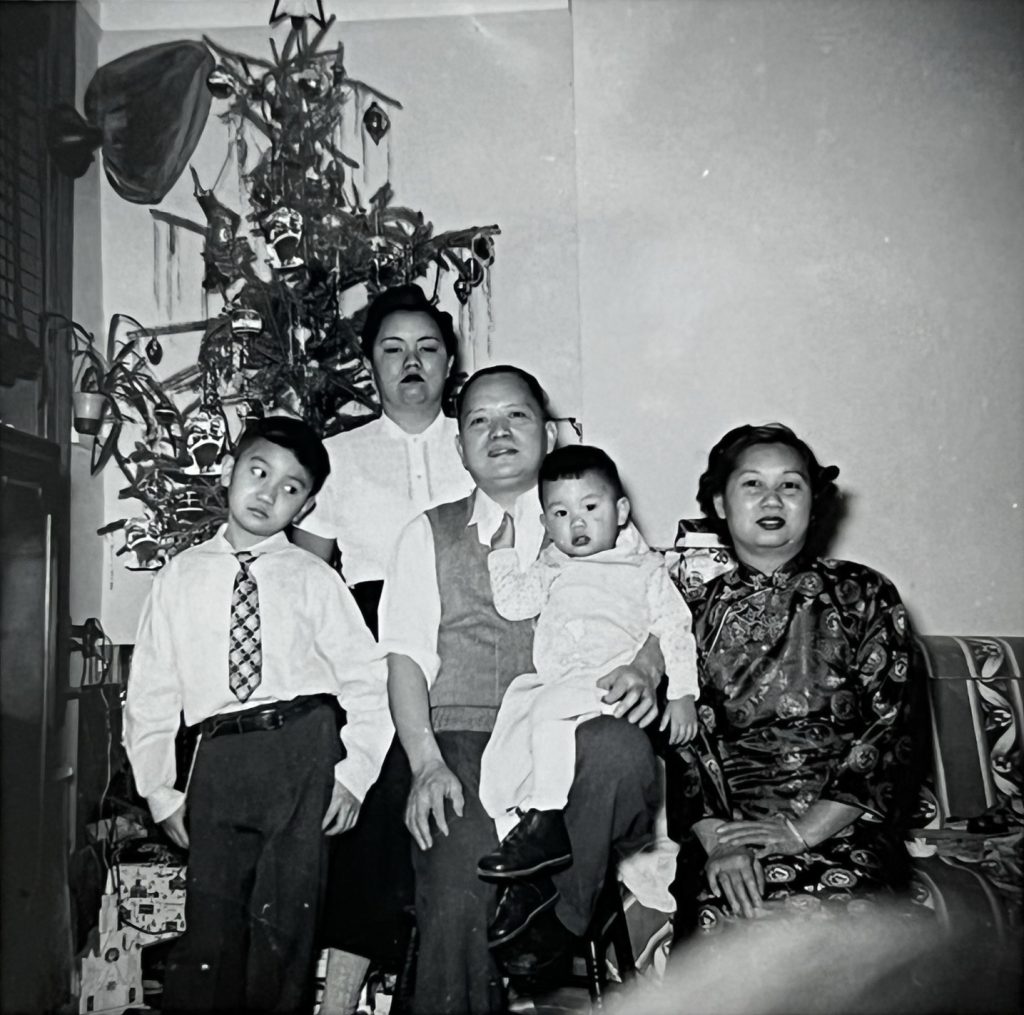
(Left) Mother, Ira Chan-Kee, the wife of Sing Lau Kee and older stepsister to my father, Father, and Robert. (Right) Roland, Elaine, Father, Robert, and Mother, Christmas time 1956.
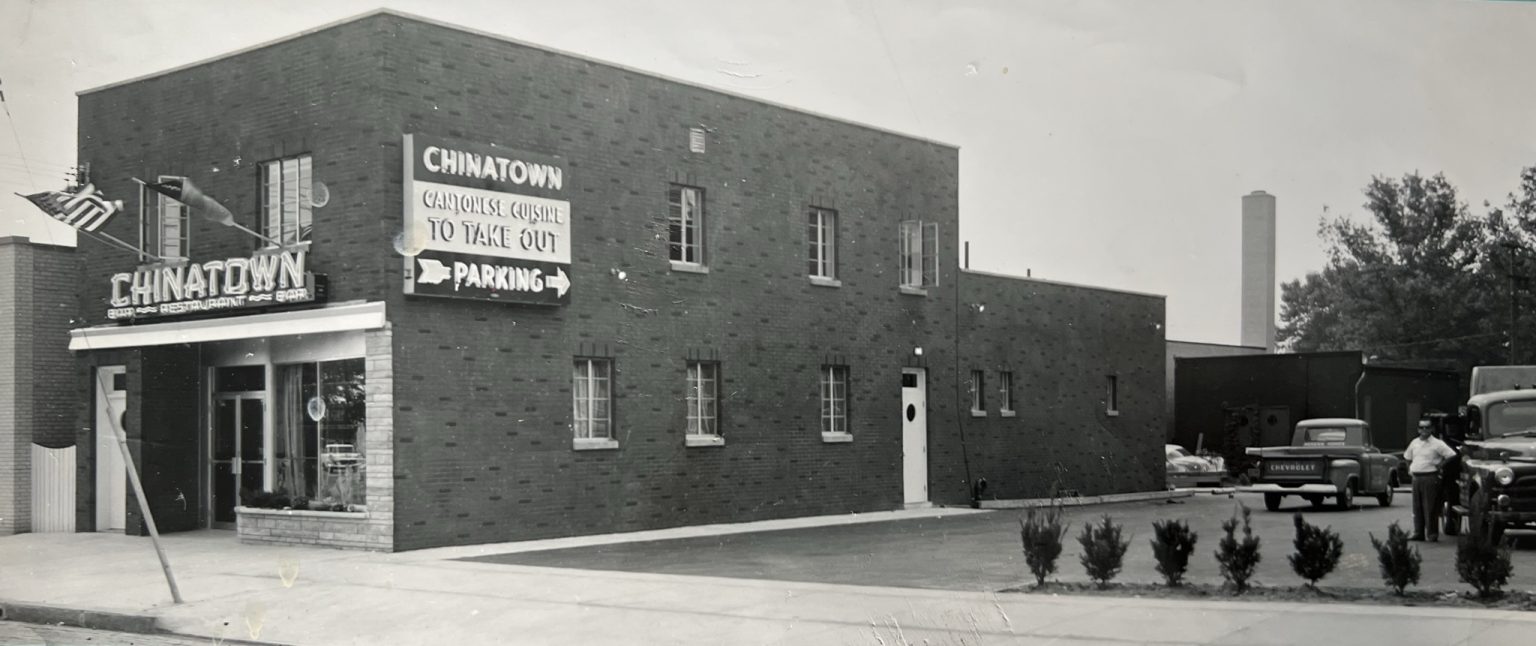
+ Why did your family move out of the building? In 1958, my father found a location for a restaurant on Staten Island. He named it “Chinatown Restaurant”. (My family sold it in 1996.) Eventually, the whole family moved out there because it was more convenient.
In 1961, the family’s stay at 100 Bayard would end and we moved into a new Staten Island house. It was around this time that my family adopted my Hong Kong cousin, Richard Ho. Three years later, my mother would proceed to give birth to another son, Roger, in her fourth decade of childbearing.
My sister, Elizabeth, kept telling me a story throughout the years that led to their move. She and my eldest sister, Elaine, were walking up the stairs and they thought they saw a cat there… it turned out it was actually a rat, the size of a cat! This was a sign that it was time to move on from 100 Bayard.
Father’s “Chinatown Restaurant” on Staten Island, 1958.
+ What do you remember about coming to Chinatown when you were a little boy? When I was a young child, I remember the cha siu bao and the har gow from Chinatown.
After our move to Staten Island, my family would frequently visit back to Chinatown. Father and my siblings would go back regularly, to get supplies and food for our restaurant. Mother would go back for visits to see friends and of course, food shopping. I would tag along and come every now and then. As mentioned before, the fattest cat chosen among cats from a Chinatown antique store would become our family house cat named ‘Boss-su-meow’. A few visits to large dinner banquets inside a particular building on Mott Street. My parents and I would attend a few Chinese theater shows with Cantonese Opera singing, acrobatic acts involving chairs and dishes, and magic tricks with goldfishes down under the Manhattan Bridge. My sister, Elizabeth, would return to her roots and work at Citibank on 2 Mott Street since its opening day.
My brother, Robert, recalls Chinatown being much quieter back then along with Columbus Park visits during school lunch breaks. My recollection of 100 Bayard St is faint since my birth roots are Manhattan-less. My remembrances include walking by that building in my youth in the late 1960’s and early 1970’s. Then suddenly, the building along with 98 Bayard would turn to ruble and then eventually a parking lot. It has been a parking lot ever since.
At exactly the same location where Roger’s father built his restaurant and his descendants: Robert, Roger, and Elizabeth. It’s a different restaurant today, but it was “Chinatown Restaurant” all those years ago. Photograph taken in 2021.